Menopause made practical: what actually helps
Are your old fitness routine failing?
Most women in their 40s and 50s reach a point where the eat less, move more mantra no longer works.
You’re doing the work. You’re hitting the cardio. You’re cutting the calories. Yet, the scale won't budge, your energy is tanking, and you feel like a stranger in your own skin.
Is it a lack of willpower? Nope.
It’s a change in your internal biology. During this phase, several key hormonal shifts occur:
Estrogen drops: This can trigger hot flashes, influence where you store fat (hello, midsection), and impact your insulin sensitivity and mood.
Progesterone drops: This often happens first, leading to increased anxiety and disrupted sleep.
Cortisol sensitivity increases: Your body becomes more sensitive to stress. This is the big one—it makes fat gain easier and recovery much harder.
Testosterone declines: This makes it harder to maintain the muscle that keeps your metabolism firing.
Hormones don’t just shut off—they become unpredictable.
If you want practical menopause advice, you have to stop fighting your body and start supporting your new physiology. Here is how we engineer success for menopause fitness tips that actually stick.
1. Swap Time for Intention
Many women try to fight menopause weight gain by doubling down on long workouts or endless cardio.
The problem? These spike your cortisol. In your 40s and 50s, chronically high cortisol is a signal to your body to store fat, not burn it. This is often why your workout is not working during menopause.
The fix: Focus on these.
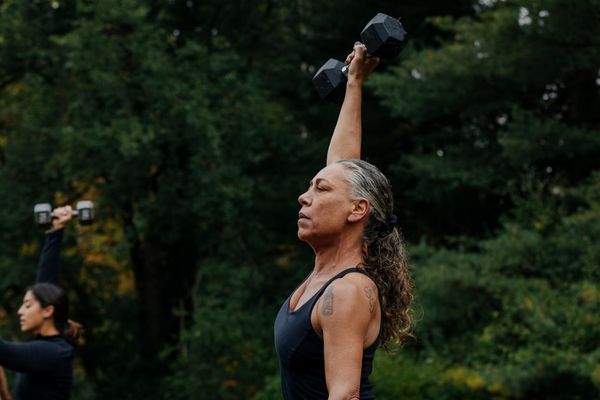
Aim for 3 full-body, progressive lifting sessions per week.
Prioritize muscle health in menopause to protect your bones and metabolism.
Add 1 higher intensity low impact interval to your week (even 30s on 30s off for 5 mins is beneficial).
Fill the gaps with daily walking or extra steps.
Excessive HIIT raises cortisol, walking lowers it. Lifting builds the engine. It’s a hormone-friendly trade.
2. Close the Protein Gap
Why does protein matter for menopausal women? Because your body is becoming less efficient at processing it. To maintain lean muscle and keep hunger in check, your protein needs actually increase.
Instead of cutting carbs, try prioritizing protein.
Simple habits for success:
Aim for 0.7 to 1.0 grams of protein per pound of body weight, daily.
The Plate Rule: Fill 1/3 of your plate with protein before you touch anything else.
Keep a protein shaker visible on your counter as a reminder.
This is the best way to become leaner during perimenopause without feeling deprived.
3. Use Practical Nutritional Guardrails
Nutrition in your 40s isn't just about calories; it’s about metabolic health for women. Beyond protein, small shifts in micronutrients can solve massive problems.
Magnesium & Zinc: These are your sleep anchors. Taking these in the evening can improve sleep quality and muscle recovery.
Fiber for Gut Health: Fiber helps your body move excess estrogen out of your system, reducing bloating.
Hydration & Electrolytes: Proper hydration is a minimum standard for managing hot flashes and maintaining energy.
Blood Sugar Stability: Pairing whole-food fats with complex carbs prevents that dreaded 3 PM energy crash.
Calcium + Vitamin D – Support bone density as estrogen declines (food first when possible).
Omega-3s – Support heart health and may reduce inflammation and mood swings.
Phytoestrogens (e.g., soy isoflavones) – Mild estrogen-like effects; results vary by individual.
Creatine – Well-researched support for maintaining muscle, strength, training capacity, and resilience during perimenopause and menopause. Typical dose: 3–5 g daily.
Note: Use caution with herbal remedies (e.g., black cohosh, red clover). Evidence is mixed and interactions are possible.
Main Takeaway: Supplements can support menopause health, but they don’t replace training, nutrition, and lifestyle fundamentals. Food first, evidence-based supplements second, and consult a clinician before starting anything new.
4. Treat Recovery as a Metric
In your 20s, you could outwork a bad night's sleep. In your 40s, sleep is a performance requirement.
If you aren't recovering, you aren't progressing. Peri-menopause lifestyle changes must include stress management. This isn't self-care fluff—it's a physiological necessity. When you lower stress, you lower cortisol, and your body finally feels safe enough to let go of stored fat.
The Bottom Line
You don’t need a new you. You need a new strategy.
Menopause requires you to adjust your training, nutrition, and recovery—not abandon them. When you provide the right structure, your body responds.
What is one small change you can make today?
Maybe it’s filling a water bottle before bed or scheduling your first strength session.
Start there.
Ready to stop the guesswork?
Navigating these biological shifts alone is exhausting. If you want a clear, personalized roadmap to help you feel strong and capable again, let's talk. Personal coaching is the bridge between doing everything and doing what actually works.
