Starting Strength Guide
A faster metabolism, more strength, better posture, and a leaner body — when done correctly, strength training delivers all of it, even for beginners.
You don’t need heavy weights, long workouts, or advanced technique. You just need simple movements done well, slow controlled reps, and a routine you can repeat progressively.
Here are a few core principles to help avoid the most common mistakes.
How to Start Strength Work Safely and Effectively
Learn foundational movements before adding load
Focus on clean technique in basic patterns (squat, hinge, push, pull, and core bracing). Good movement equals good results. This means start body weight, light dumbbells, TRX or some selectorized machines. Don't jump into the barbells or kettlebells right off the bat.
Use a slow tempo
Lower weights or your bodyweight for 3–5 seconds. This improves control, increases muscle activation, and protects your joints. Quality always beats quantity.
Use beginner-friendly rep ranges
The best range for beginners using slow tempo: 8–12 reps
Long enough to learn control, short enough to maintain quality. Skip the 2-6 range using heavier loads or the 15+ that cranks your heart rate up.
Warm up for 3–5 minutes
Simple mobility or light movement prepares your joints and boosts performance. No need for a long routine. Lengthen the muscles you're training the get your body temperature up.
Train consistently, not excessively
Two or three full-body workouts per week (about 25–35 minutes) are perfect for beginners. Make workouts not 'hard' but hard to miss. You want to avoid raising the bar too high too soon. This often leads to a crash and burn with the initial motivation fades.
Build full-body strength each session
Include:
One lower-body movement
One pushing movement
One pulling movement
One core or stability drill
This keeps strength balanced and avoids plateaus.
Track your workouts
One of the biggest beginner mistakes is not recording weights, reps, or sets.
If you don’t track it, you can’t progress it.
Small increases — like an extra rep or slightly heavier dumbbell — compound over time.
Use super-sets to stay efficient (and fresh)
Pair two movements (e.g., push + pull) and alternate with 60–90 seconds of rest between them.
Benefits:
More work in less time
Higher movement quality
Better focus without burnout
Progress gradually
Slow, steady improvements beat random “intensity.” Add reps or weight only when your form stays clean. Take the approach that you're going to strength train for life — yes quick results are nice, but long term consistency is priority 1.
Listen to your body
Muscle fatigue is normal.
Sharp pain, pinching, or joint discomfort is a signal to stop or adjust. Certain exercises and planes of motion are not for everyone. For example, if you hunch at your desk all day and have limited overhead movement with your arms, chances are overhead pressing is not going to feel good.
Common Beginner Mistakes to Avoid
Rushing through reps
Fast reps reduce control and increase risk. Slow is safe — and more effective.
Starting too heavy
Heavier weights can hide poor technique. Earn the increase through good form.
Skipping warmups
Cold muscles are weaker and more injury-prone. Just a few minutes makes a big difference.
Not tracking progress
If every workout feels random, you’ll stall. Tracking builds momentum.
Training only your favourite muscles
Balanced strength prevents imbalances, injury, and plateaus.
Comparing yourself to advanced lifters
Your pace matters. Start where you’re at.
Doing too much too soon
Volume and intensity grow slowly. Consistency does the real work.
Neglecting recovery
Good sleep, hydration, and basic nutrition amplify your strength gains.
A Few Recommended Beginner Strength Movements (Video Examples Below)
These three simple movements are safe, effective, and teach the exact control beginners need. Place your videos right under each heading.
1. One-Arm Dumbbell Floor Press
A stable, shoulder-friendly way to build upper-body strength and core stability.
Coaching cues:
Brace core and contract glutes to keep hips up.
Elbow angled about 45° from your side.
Deep inhale, slowly lower to the floor.
Exhale, press straight up from the chest (not toward your face).
Resist rotation or dropping hips.
Start with 1 leg progression, progress into single leg.
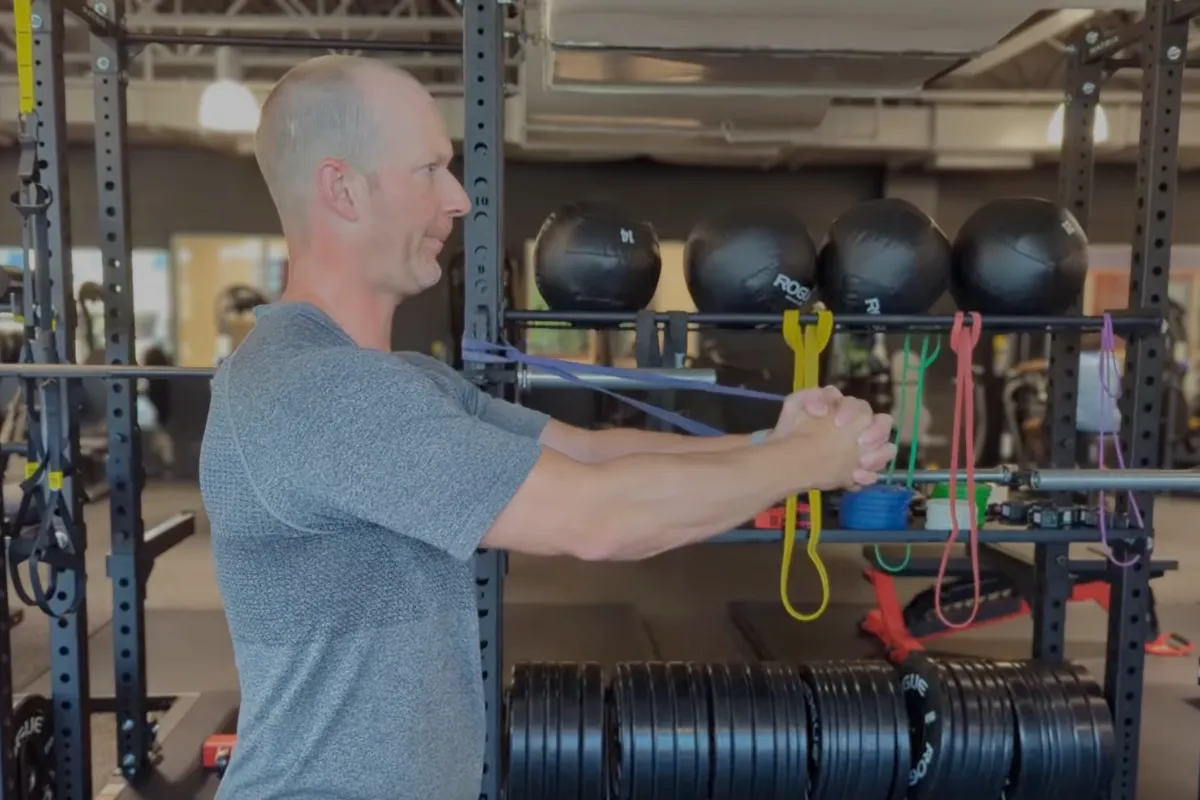
2. Pallof Press
One of the best core movements for beginners — trains stability and protects your spine.
Coaching cues:
Stand tall with soft knees; feet hip-width.
Handle at chest height; elbows tucked.
Brace your core and deep inhale.
Exhale, press straight forward and pause briefly.
"Fight the twist" and stay square.
Control the return to your chest.
3. Split Squat
A controlled way to strengthen your legs while improving balance and joint stability.
Coaching cues:
Feet like cross country skies with feet facing forward.
Deep inhale, brace core and slower lower down.
Front knee tracks over toes — no collapsing inward.
Keep torso tall with slight lean forward.
Exhale up.
4. Band Pull Apart
Simple movement to strengthen upper muscles and posture while teaching correct scapula movement.
Coaching cues:
Start with arms straight and band at chest height.
Pull the band apart by driving elbows slightly back — not shrugging.
Keep shoulders down and ribs tucked (don’t flare).
Squeeze shoulder blades gently together at the end range.
Control the return — no snapping back.
Final Takeaway
Strength training is one of the most effective ways to get stronger, leaner, and more confident — and beginners make progress quickly when they use slow, controlled reps, balanced workouts, and simple progression.
If you want guidance learning movements safely and building a plan that fits your lifestyle, this is exactly what we do inside Prevail Coaching.
If you want coaching that meets you where you’re at and helps you move forward with confidence, we’re here when you’re ready.


